Wondering which DC Ranch village actually fits the way you want to live? That is a smart question, because in a master-planned community this large, your day-to-day experience can change quite a bit from one village to the next. If you are comparing privacy, walkability, home style, or social energy in DC Ranch, this guide will help you sort through the differences with more clarity. Let’s dive in.
Why village choice matters
DC Ranch spans about 4,400 acres in North Scottsdale near the McDowell Sonoran Preserve. According to the community, it includes four villages, 26 neighborhoods, more than 2,800 homes, and about 7,000 residents. That scale means your village choice shapes more than your mailing address. It can influence how connected, quiet, active, or estate-oriented your home feels.
Across the community, you will also find 47 parks and more than 50 miles of landscaped paths and trails. The trail system is designed to help residents move through DC Ranch without crossing busy streets, and it connects parks, community centers, and ultimately the preserve. That shared framework gives the entire community a strong outdoor identity, but each village interprets it differently.
DC Ranch villages at a glance
If you want the shortest version, each village tends to attract a different kind of buyer profile. Here is the practical buyer lens.
| Village | Best fit for | General feel |
|---|---|---|
| Country Club | Buyers who want classic DC Ranch character and a golf-club setting | Established, desert-preserving, traditional |
| Desert Camp | Buyers who want walkability and low-maintenance options | Social, mixed-use, convenient |
| Desert Parks | Buyers who want a park-centered neighborhood feel | Neighborly, quieter, connected |
| Silverleaf | Buyers who want privacy and custom estate living | Formal, elevated, estate-driven |
Country Club Village
Best for established golf-club living
Country Club Village is one of the two original villages in DC Ranch. The first homes were built in the late 1990s, and the first residents arrived in 1997. For many buyers, that history matters because it gives the village a more rooted and established feel.
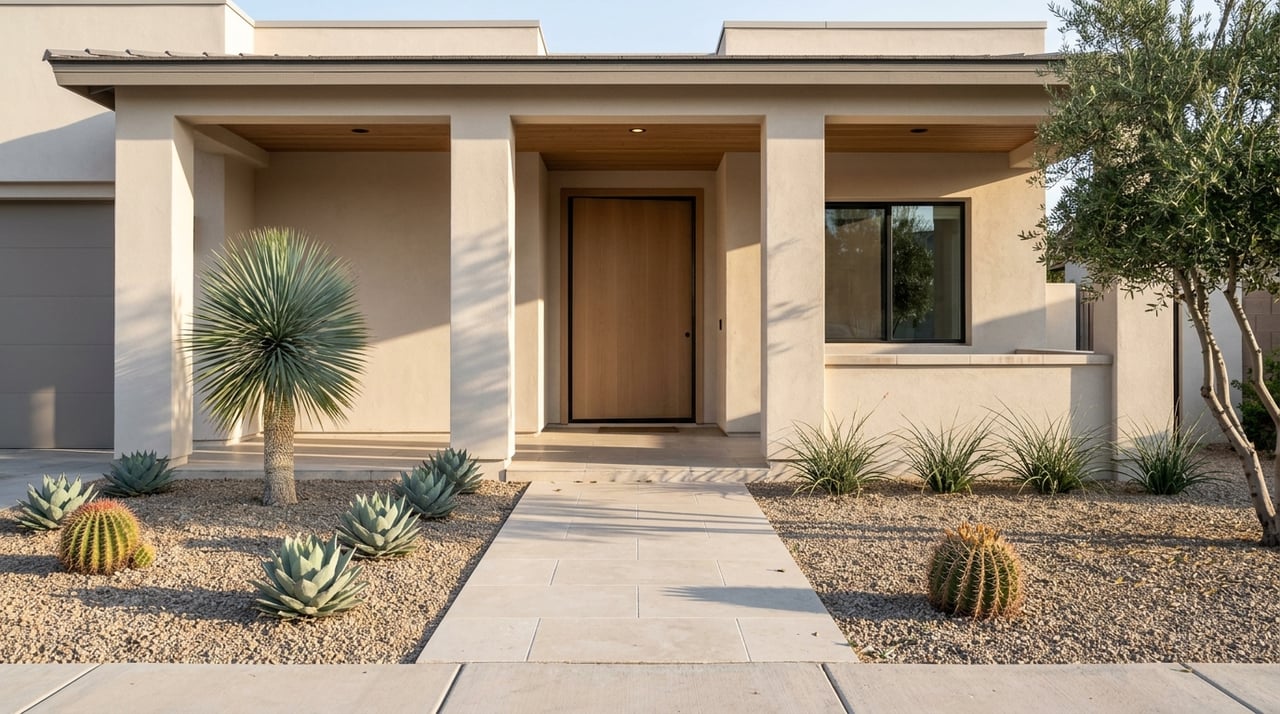
This village is bounded by Pima Road and the Reata Wash. Its architecture leans toward Western Regional Farm House, Ranch House, Spanish Eclectic, Pueblo, Prairie, and related contemporary interpretations. If you are drawn to a desert-sensitive setting with a traditional luxury tone, this village often stands out quickly.
What buyers tend to notice
Country Club Village is often the clearest fit for buyers who want the original DC Ranch atmosphere. It has a strong golf-club identity, and The Country Club at DC Ranch is located here with golf, dining, fitness, tennis, and swimming. At the same time, it still reads as landscape-forward rather than overly formal.
Representative neighborhoods include Country Club, Columbia Community, Monterey, Happy Hollow, Cross Canyon, Tapadero, Iron Rings, and Craggy Spur. If your priorities include established surroundings, golf-oriented living, and architecture that feels closely tied to the Sonoran Desert, Country Club Village deserves a close look.
Desert Camp Village
Best for walkability and convenience
Desert Camp is the other original village, and it offers one of the broadest housing mixes in DC Ranch. Here you will find single-family homes, attached patio homes, condominiums, and townhomes. That variety makes it especially appealing if you want options in both lifestyle and maintenance level.
Desert Camp sits east of Pima Road and south of Thompson Peak Parkway. It is also home to Market Street, the community’s mixed-use retail, restaurant, and office hub. For many buyers, that simple fact makes Desert Camp the most naturally walkable and socially connected village in DC Ranch.
Why it feels more social
DC Ranch describes the Desert Camp Community Center as the heart of community activities, events, and social gatherings. The center reopened on December 7, 2024 after site improvements that added an expanded fitness center, a dedicated fitness studio, resident gathering space, additional courts, and a walking path. If you value activity and convenience close to home, that can be a meaningful advantage.
Market Street Park adds another layer to the lifestyle. It includes a half-acre of public open space, a fire pit, grills, a play area, a natural stage, and spring concerts. Combined with nearby dining and coffee options, Desert Camp often feels like the most active and easiest-to-navigate choice for buyers who want a lock-and-leave or low-maintenance setup.
Who usually prefers Desert Camp
Representative neighborhoods include Market Street Villas, Courtyards at Market Street, Village at Market Street, Desert Camp Villas, Pioneer, Montelena, Camelot 93rd Place, Camelot 94th Way, Camelot 96th Way, Rosewood, and The Haciendas. If you want to be closer to restaurants, community programming, and attached-home options, Desert Camp is often the best fit. It can also be a practical village to compare if you prefer a more turnkey lifestyle within DC Ranch.
Desert Parks Village
Best for a neighborhood-centered feel
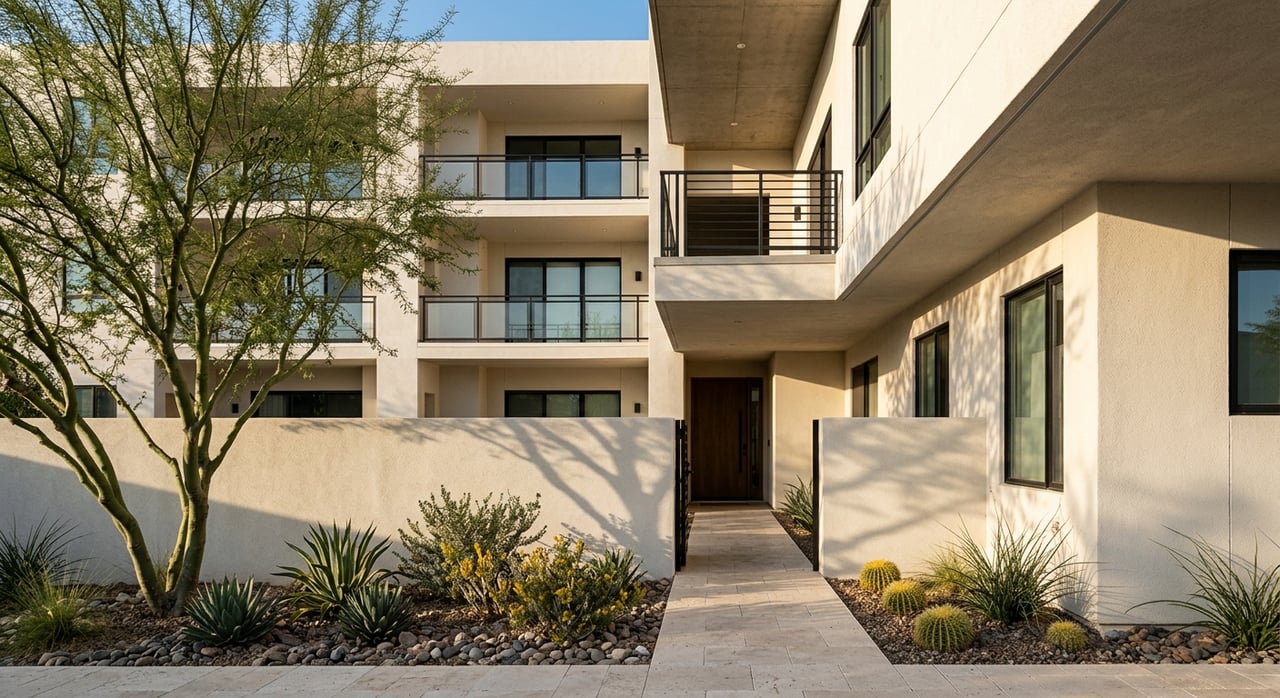
Desert Parks sits east of Pima Road and south of Legacy Boulevard. Its housing mix includes custom and non-custom single-family homes, attached homes, and luxury apartments. That range creates a more neighborhood-centered environment, especially for buyers who want a quieter internal village rather than a club-centered or estate-centered experience.
DC Ranch says many Desert Parks neighborhoods include a park, natural wash areas, and private gated access. The village design emphasizes shade, open areas, play structures, and low-density lighting to encourage residents to spend time outside. In practical terms, this can feel more intimate and community-oriented than some buyers expect from a luxury address.
What sets Desert Parks apart
Desert Parks is often the best match if you want a front-porch-type atmosphere. The streetscape tends to feel more neighborly, and the park-centric layout gives the village a strong everyday-living appeal. That does not mean it lacks luxury. It simply means the design focus leans more toward connection and outdoor use than grand statement settings.
Representative neighborhoods include Maracay Desert Haciendas, The Villas, Terraces West, Terraces East, Villas at Desert Park, Ashton Woods Park, Ashton Woods Manor, The Estates, Courtyards at Desert Parks, Camden Foothills, and Desert Parks Vista. For buyers who want attached-home choices, parks close by, and a quieter village rhythm, Desert Parks is often a strong contender.
Silverleaf Village
Best for privacy and custom estates
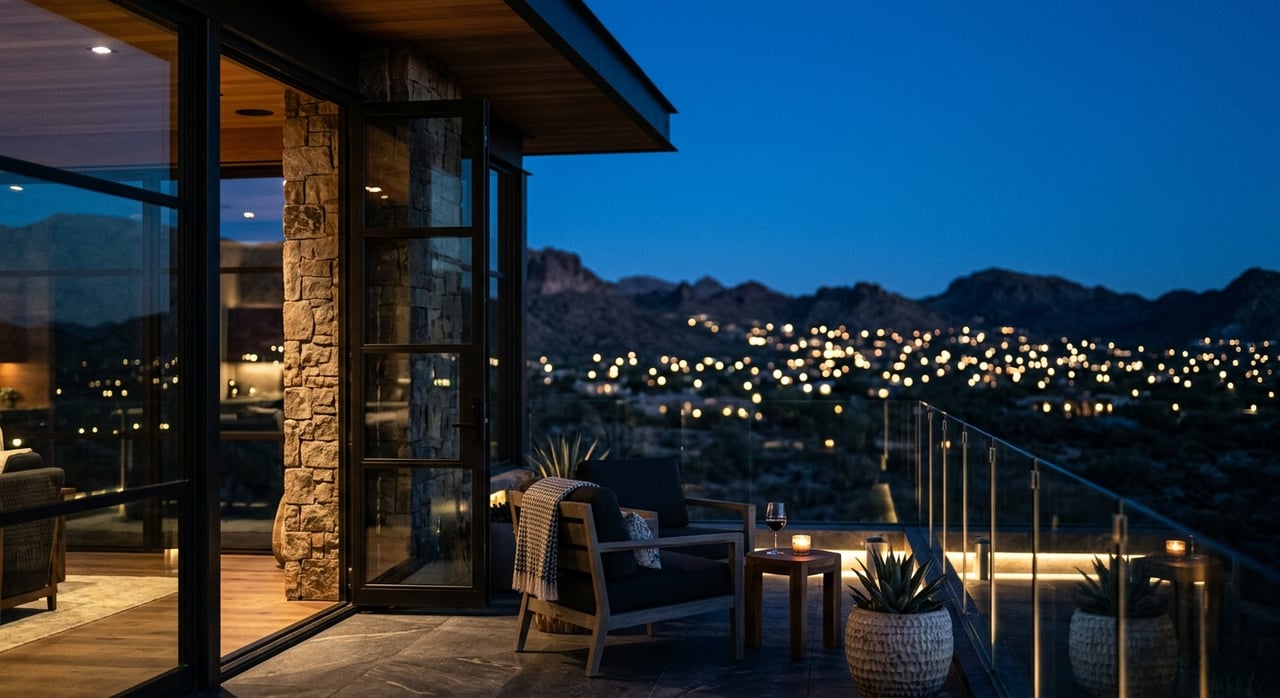
Silverleaf is the most estate-driven village in DC Ranch. The community describes it as an exclusive enclave shaped by the McDowell Mountain hillsides, with Spanish and Mediterranean Revival estate architecture, formal gardens, and significant open-desert space. If you are searching for a private custom-home environment, this is the natural place to focus.
Many custom lots sit on the Silverleaf Golf Course, while others climb into the hills with Valley views. The village also features more formal landscaping, tree-lined streets, paved alleyways, and 11 parks. The overall impression is more polished and elevated, with a stronger sense of separation and privacy.
Why buyers compare Silverleaf differently
Silverleaf tends to appeal to buyers who want the highest level of estate character in DC Ranch. It is often the first choice if your wish list includes custom architecture, golf-course frontage, hillside positioning, or a more formal luxury atmosphere. Compared with the other villages, it reads as the most private and most intentionally curated.
Representative neighborhoods include Rob’s Camp, Silverleaf Village 5.1-5.7, Silverleaf Village 102nd St., Saguaro Canyon, Whistling Wind, Wingspan, Acacia Court, Veranda Place, Crescent Park, Villas at Silverleaf, Canyon Villas at Silverleaf, Canyon Villas, The Sterling Estates, Arcadia, and ICON at Silverleaf. The village also includes a pedestrian underpass near Copper Ridge School, which is part of its internal connectivity.
Shared amenities across DC Ranch
While the villages differ, they all benefit from the broader DC Ranch lifestyle framework. The community is gate-managed, with 24-hour community patrol and 23 gates throughout the community. For many luxury buyers, that controlled-access environment is part of the appeal.
DC Ranch also highlights three marquee clubs nearby: The Country Club at DC Ranch, Silverleaf Club, and DC Ranch Village Health Club & Spa. Together, they add golf, tennis, swimming, fitness, yoga, spa services, and dining to the wider lifestyle picture. Depending on the village you choose, your relationship to those amenities may feel more central or more secondary.
For shopping, dining, and services, buyers often look at Market Street, DC Ranch Crossing, and Canyon Village. For larger community gatherings and youth-friendly recreation, The Homestead includes a splash pad, adventure playground, basketball court, community theatre, and indoor and outdoor event facilities. DC Ranch also says Desert Camp and The Homestead are central to community activities and social gatherings.
How to choose the right village
Start with how you want to live
The best village for you usually comes down to rhythm, not just square footage. If you want classic desert architecture and a strong golf-club identity, Country Club Village may feel right. If you want convenience, walkability, and lower-maintenance options, Desert Camp often rises to the top.
If you picture a quieter, more park-oriented setting with a connected neighborhood feel, Desert Parks is worth serious attention. If your priorities are privacy, custom estates, and a more formal luxury atmosphere, Silverleaf is usually the strongest match. In a community as layered as DC Ranch, lifestyle fit matters just as much as the home itself.
Compare more than the home search filters
When you tour DC Ranch, it helps to compare each village by a few simple questions:
- Do you want to be near retail, dining, and events?
- Are you looking for attached living, a single-family home, or a custom estate?
- Does a golf-club setting matter to you?
- Do you prefer a more social environment or a more private one?
- Would you rather have a neighborhood-centered feel or a formal estate atmosphere?
Those questions can narrow your search quickly and save time. They also help you focus on how each part of DC Ranch will actually feel once you live there.
If you want help comparing the villages through a local luxury lens, David Newcombe can provide a private consultation and curate listings based on the lifestyle, privacy, and property features that matter most to you.
FAQs
What are the four villages in DC Ranch?
- DC Ranch is made up of Country Club Village, Desert Camp Village, Desert Parks Village, and Silverleaf Village.
Which DC Ranch village is most walkable?
- Desert Camp is generally the most walkable village because it includes Market Street and has strong access to community programming, dining, coffee, and mixed housing options.
Which DC Ranch village has the most private feel?
- Silverleaf is typically the most private-feeling village due to its custom estates, hillside setting, golf-course lots, and more formal luxury layout.
Which DC Ranch village is best for golf-oriented buyers?
- Country Club Village is often a top match for golf-oriented buyers because The Country Club at DC Ranch is located there and the village has the strongest golf-club identity.
Which DC Ranch village feels most neighborhood-oriented?
- Desert Parks is usually the most neighborhood-oriented option because of its park-centered design, open areas, shade-focused layout, and quieter internal village feel.
Are there condos or attached homes in DC Ranch?
- Yes. Desert Camp includes condominiums, townhomes, and attached patio homes, and Desert Parks also includes attached homes and luxury apartments.